
How do I make sure that my drive belt is correctly tensioned on my Petrol Lawnmower
Modified on Tue, 30 Jun at 4:39 PM
Quick Answer
If your self-propel system is not working correctly, the drive belt may be loose, worn, or not correctly tensioned. The belt should sit firmly on the pulleys with slight flexibility, and the gearbox tension spring must be correctly attached to maintain correct tension.
⚠️ Safety Notice
Before inspecting the drive belt:
- Switch off the mower and allow all moving parts to stop
- Remove the spark plug cap where possible
- Ensure the mower is on a stable, flat surface
- Keep hands clear of blades and pulley areas
Do not operate the mower with a damaged or loose drive system.
Understanding the Drive Belt System
The drive belt transfers power from the engine to the gearbox, enabling the self-propel function.
The system relies on:
- Drive belt
- Gearbox pulley
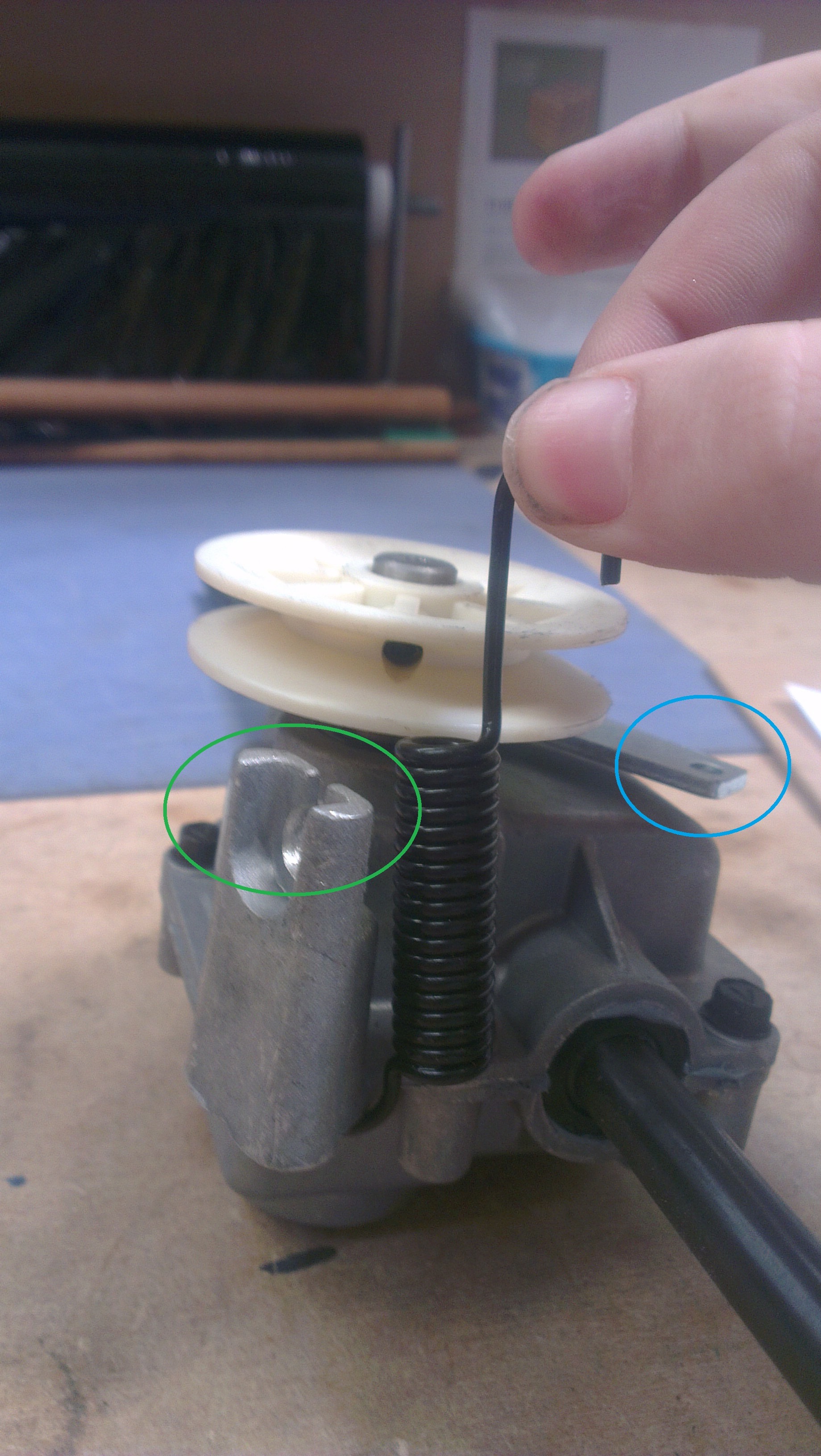
- Gearbox tension spring
The tension spring maintains correct belt tension. If it becomes loose or detached, the belt may slip or stop driving the mower.
Checking the Drive Belt
Tools Required
- No tools required for basic inspection
- Pliers may be required if the tension spring needs reattaching
Step 1 – Locate the Drive Belt
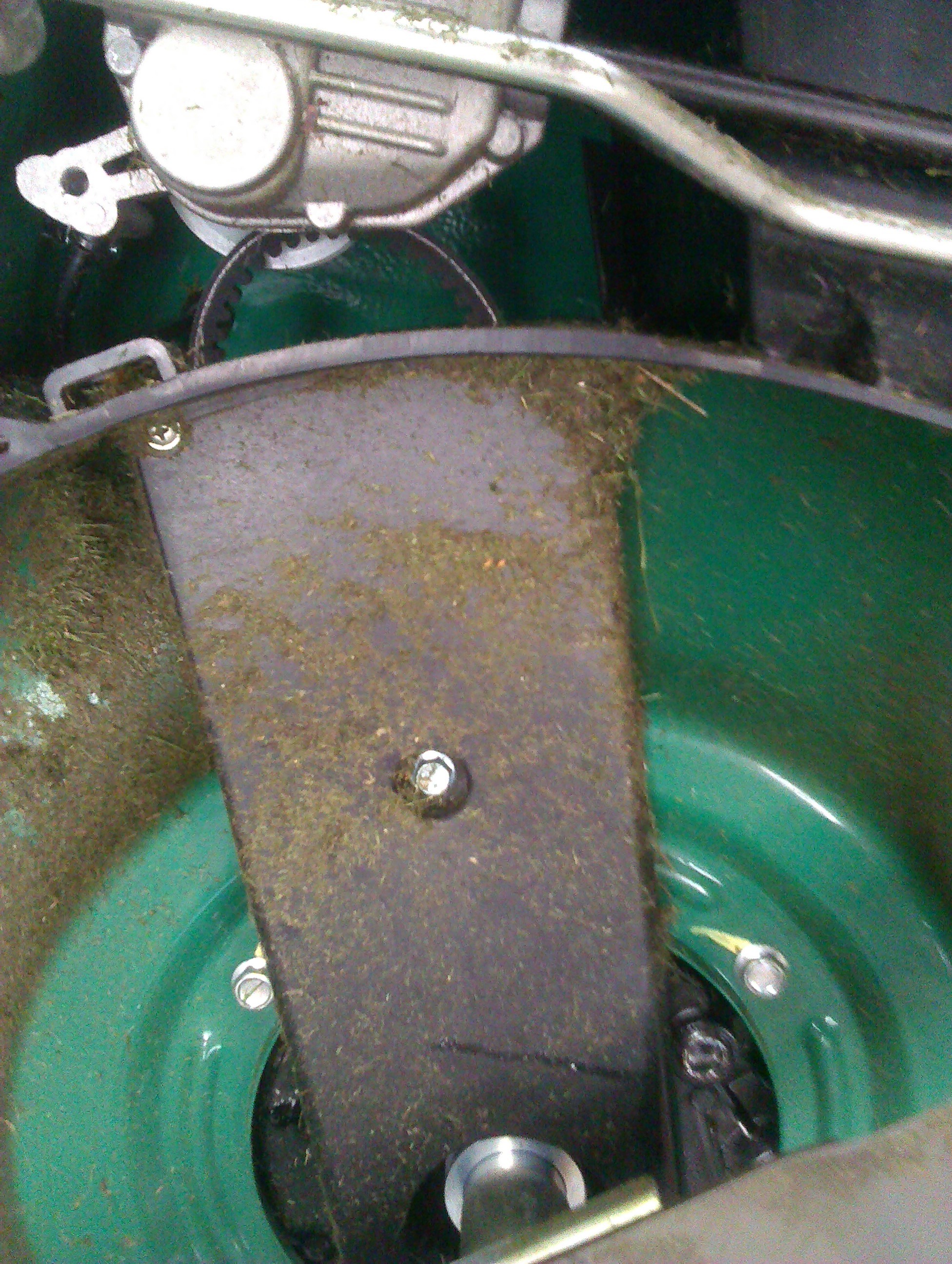
The drive belt runs between:
- Blade adaptor under the mower deck
- Gearbox pulley on top of the gearbox assembly
Step 2 – Check Belt Tension
With the engine off:
- Press the belt gently sideways
- A small amount of movement is normal
- The belt should remain seated on both pulleys
If the belt moves excessively or feels loose, tension may be incorrect.
Step 3 – Inspect Belt Condition
Check the full visible belt for signs of wear:
- Cracks
- Fraying
- Splitting
- Glazing or polishing
- Excessive wear
If any damage is present, the belt should be replaced.
Checking the Gearbox Tension Spring
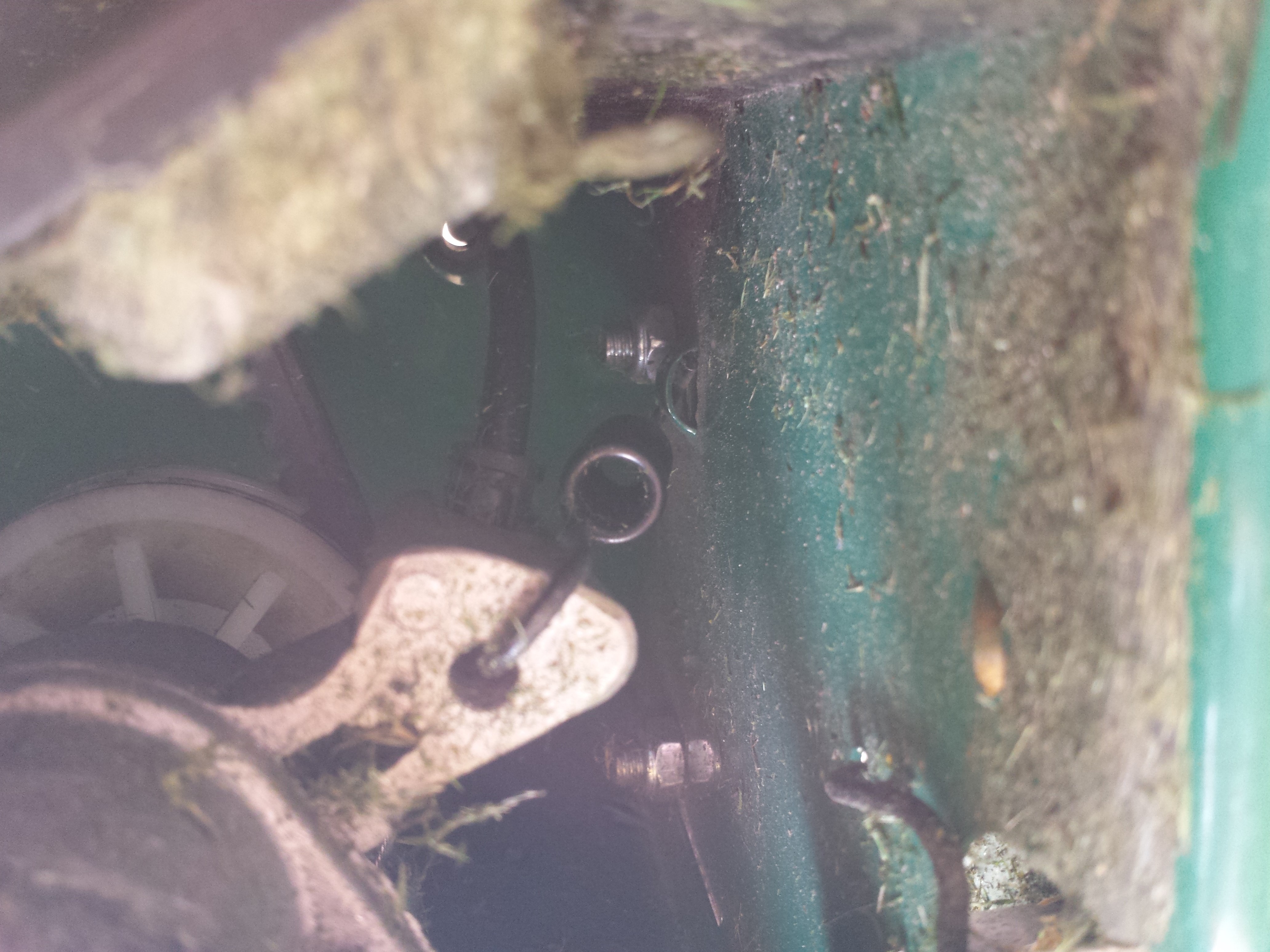
The gearbox tension spring keeps the belt under correct tension during operation.
Step 1 – Inspect the Spring
Ensure the spring is:
- Securely attached at both ends
- Not stretched or distorted
- Free from damage or corrosion
- Not obstructed by debris
If the Spring Is Detached
If the spring has come loose:
- The belt may slip off the pulley
- The self-propel system may fail to engage
Reattach the spring securely before use.
If the spring is missing or damaged, it must be replaced.
Common Faults
Belt Has Slipped Off the Pulley
This may be caused by:
- Detached or loose tension spring
- Worn or stretched belt
- Incorrect installation
Belt Is Damaged
A worn belt may:
- Slip under load
- Reduce drive performance
- Stop the self-propel system working completely
Replacement is recommended.
Spring Is Missing or Broken
Without the tension spring:
- The belt cannot maintain correct tension
- The self-propel system will not function properly
Frequently Asked Questions
How tight should the drive belt be?
The belt should be firm on the pulleys but still have slight flexibility when pressed. It should not feel loose or overly tight.
What happens if the drive belt is loose?
A loose belt may:
- Slip under load
- Reduce or stop self-propel function
- Cause poor drive performance
Can I reuse a worn drive belt?
No. If the belt shows cracks, fraying, or glazing, it should be replaced.
Why does my belt keep coming off?
Common causes include:
- Missing or detached tension spring
- Worn belt
- Misaligned pulleys
Do I need tools to check the belt?
Basic inspection can be done without tools, but pliers may be required if the tension spring needs reattaching.
Was this article helpful?
That’s Great!
Thank you for your feedback
Sorry! We couldn't be helpful
Thank you for your feedback
Feedback sent
We appreciate your effort and will try to fix the article