
My Petrol Strimmer/Brush Cutter will not idle
Modified on Tue, 30 Jun at 3:44 PM
Quick Answer
If your petrol strimmer or brush cutter starts but stalls when the throttle trigger is released, the most common causes are stale fuel, a blocked air filter, or incorrect carburettor settings. Before adjusting the carburettor, carry out the basic checks below to rule out common issues.
⚠️ Safety Notice
Before carrying out any maintenance or adjustments:
- Switch off the engine and allow it to cool completely.
- Wear suitable personal protective equipment (PPE), including gloves and eye protection.
- Keep the cutting head clear of people, pets, and objects.
- Carburettor adjustments should only be carried out using the correct tools and by someone with suitable mechanical knowledge.
Incorrect carburettor adjustment can affect engine performance and may cause engine damage.
Why Won't My Strimmer Idle?
If the engine starts but cuts out when the throttle is released, possible causes include:
- Old or incorrectly mixed fuel
- A blocked or dirty air filter
- Restricted fuel flow
- Incorrect carburettor settings
- General engine wear or maintenance issues
Begin with the simple checks below before attempting any carburettor adjustments.
Preliminary Checks
Check the Fuel
Ensure the fuel is:
- Fresh
- Mixed to the correct ratio recommended by the manufacturer
- Free from contamination
Old or incorrectly mixed fuel can prevent the engine from idling correctly.
Check the Air Filter
Inspect the air filter for dirt and debris.
A blocked air filter restricts airflow and can cause:
- Poor idling
- Loss of power
- Difficult starting
Clean or replace the air filter if necessary.
Check the Fuel Cap
Ensure the fuel cap is fitted correctly and tightened by hand.
The cap should be secure but not overtightened, as this may affect fuel tank ventilation.
Carburettor Adjustment
If the preliminary checks have been completed and the engine still will not idle, the carburettor settings may require adjustment.
Important
⚠️ Carburettor adjustment requires mechanical knowledge and the correct adjustment tool.
Incorrect adjustment can:
- Prevent the engine from idling correctly
- Reduce engine performance
- Cause engine damage
- Invalidate your warranty
If you are unsure, please contact our Technical Support Team before proceeding.
Tools Required
- Carburettor adjustment tool (Pacman type)
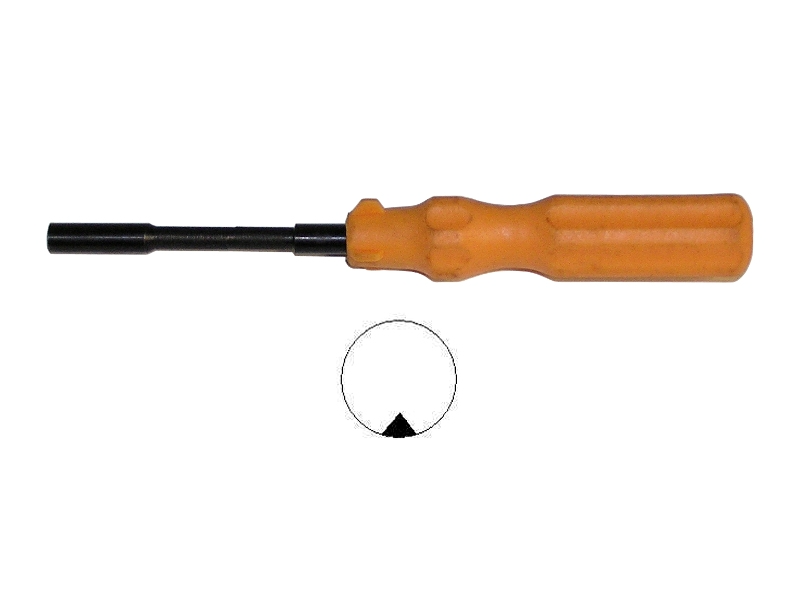
Adjustment Procedure
Step 1: Warm Up the Engine
Start the engine and allow it to reach normal operating temperature before making any adjustments.
Step 2: Locate the Adjustment Screws
The carburettor contains the following adjustment screws:
| Screw | Function |
|---|---|
| L (Low Speed) | Controls idle and low-speed operation |
| H (High Speed) | Controls maximum engine speed |
| T / LA (if fitted) | Controls idle speed |
Step 3: Adjust the Low-Speed (L) Screw
Slowly adjust the L screw until:
- The engine idles smoothly.
- The engine no longer stalls when the throttle is released.
- The cutting head remains stationary while idling.
Make small adjustments and allow the engine to stabilise after each adjustment.
Step 4: Check the High-Speed (H) Screw
With the engine running at full throttle:
- Turn the H screw anti-clockwise until the engine begins to lose maximum RPM.
- Slowly turn the screw clockwise until the engine reaches maximum RPM and runs smoothly.
- Release the throttle and confirm the engine returns to a stable idle.
If the Problem Persists
If the engine still will not idle after completing these checks:
- Check the fuel filter for blockages.
- Inspect the spark plug for wear or carbon deposits.
- Check the fuel lines for leaks or damage.
- Ensure the carburettor is clean and free from contamination.
If you are unable to resolve the issue, please contact our Technical Support Team for further assistance.
Frequently Asked Questions
Why does my strimmer stall when I release the throttle?
This is commonly caused by stale fuel, a blocked air filter, incorrect carburettor settings, or restricted fuel flow.
What does the L screw adjust?
The L (Low Speed) screw controls the fuel mixture during idle and low engine speeds.
Should the cutting head rotate while idling?
No. The cutting head should remain stationary when the engine is idling correctly.
Can old fuel cause poor idling?
Yes. Old or incorrectly mixed fuel is one of the most common causes of poor engine performance and unstable idling.
Can I adjust the carburettor myself?
Only if you have the correct adjustment tool and experience. Incorrect adjustments can worsen engine performance and may invalidate your warranty.
Was this article helpful?
That’s Great!
Thank you for your feedback
Sorry! We couldn't be helpful
Thank you for your feedback
Feedback sent
We appreciate your effort and will try to fix the article