
Chainsaw
Chainsaw
Petrol Chainsaw Garden Equipment Products

How do I start my Petrol Chainsaw
Overview
Starting a petrol chainsaw safely requires correct preparation of the chain brake, fuel system, and starting sequence. Following the correct steps ensures reliable starting and safe operation.
Step-by-Step Guide
Step 1: Safety and Pre-Start Checks
Before starting, ensure:
- The chain is correctly tensioned
- The guide bar and chain are in good condition
- The chain brake is functioning correctly
- The chain is not touching any surface and is pointing away from your body
Important: Do not use the chainsaw if the chain brake is faulty.
Step 2: Test the Chain Brake
- Push the brake lever forward until it clicks (engaged)
- Confirm the chain does not move by hand
- Pull the brake lever back until it clicks again (disengaged)
- Confirm the chain now moves freely
If the lever does not click firmly in both positions, stop and contact support.
Step 3: Starting the Chainsaw (Cold Start)
- Engage the chain brake (push forward until it clicks)
- Set the switch to the START position
- Press the primer bulb 10 times until it is about ¾ full of fuel
- Pull the choke control fully out
- Place the chainsaw securely on the ground
- Pull the starter cord 4 times (engine may not start yet)
- Push the choke back in
- Pull the starter cord up to 5 more times until the engine starts
- Allow the engine to idle and warm up for ~30 seconds
- Disengage the chain brake before cutting
Step 4: Warm Restart
If the engine has recently been running:
- Do not usually use the choke
- Pull the starter cord until the engine starts
- Allow a short warm-up before use if needed
Important Safety Information
- Always test the chain brake before use
- Never start the chainsaw with the chain brake disengaged
- Keep the bar and chain clear of all objects during starting
- Always hold the chainsaw firmly on the ground when starting
- Allow the engine to warm before applying load
Frequently Asked Questions
Why won’t my petrol chainsaw start?
Common causes include incorrect choke position, insufficient priming, stale fuel, or not enough starter pulls.
Why does my chainsaw start then cut out?
This is usually caused by incorrect choke use or not allowing enough warm-up time.
Do I need to engage the chain brake when starting?
Yes. The chain brake must always be engaged before starting the engine.
How many times should I pull the starter cord?
Typically 4 pulls with choke, then up to 5 pulls after adjusting choke, depending on engine condition.
Can I start it without priming?
No. Priming is essential to deliver fuel to the carburettor for starting.
My Petrol Chainsaws engine is not working correctly
Overview
Most petrol chainsaw engine issues are caused by incorrect fuel mix, stale fuel, or improper starting conditions. This guide focuses on checking and correcting the fuel system before further troubleshooting.
Video Guide
This video explains how to assemble, prepare, and start your chainsaw correctly:
My engine is running to fast on my Petrol Chainsaw
Overview
If your petrol chainsaw is revving higher than normal or running at excessive speed, it is usually caused by a throttle control issue, incorrect choke position, or a cable that is sticking or misaligned. Carry out the checks below before continuing to use the machine.
Step-by-Step Guide
Step 1: Safety First
- Stop using the chainsaw immediately if the engine is over-revving
- Engage the chain brake
- Place the chainsaw on a stable surface
- Ensure the chain is not able to rotate freely during inspection
Step 2: Check the Throttle Cable
- Inspect the throttle cable for damage or wear
- Check for kinks, tight bends, or trapped sections
- Ensure the cable moves freely when the trigger is released
A sticking or damaged cable can prevent the throttle from returning to idle.
Step 3: Check the Choke Position
- Confirm the choke is fully disengaged after starting
- A partially engaged choke can cause abnormal engine speed and performance issues
Ensure the choke lever is fully in the “run” position during operation.
Step 4: Reset the Throttle Control
- Press and release the throttle trigger several times
- This resets the throttle return mechanism
- Confirm the trigger returns smoothly to its resting position
Step 5: Check the Trigger Cable Guide
- Inspect where the trigger cable exits the handle
- Ensure the cable guide is correctly seated in its housing
- A misaligned guide may prevent smooth throttle movement
Important Safety Information
- Never operate the chainsaw if it is over-revving
- Always engage the chain brake during inspection
- Do not force the throttle or trigger mechanism
- Stop use immediately if the engine does not return to idle
Frequently Asked Questions
Why is my chainsaw revving high even when I’m not touching the trigger?
This is usually caused by a sticking throttle cable or misaligned cable guide preventing the throttle from returning to idle.
Can the choke cause high engine speed?
Yes. If the choke is not fully disengaged, it can affect engine behaviour and cause abnormal running.
Is it safe to continue using the chainsaw?
No. If the engine is running too fast, stop using it until the cause is identified and corrected.
What if the throttle still doesn’t return properly?
The cable or trigger assembly may be damaged and should be inspected by technical support or a qualified repair centre.
Could fuel issues cause this?
Fuel issues more commonly cause rough running or stalling, not continuous high revving, which is usually throttle-related.
My Petrol Chainsaw will not idle
Overview
This article explains the checks you can carry out if your chainsaw stalls when the throttle trigger is released or is unable to maintain a stable idle speed.
Step-by-Step Guide
Step 1: Safety First
- Operate the chainsaw only in a safe, well-ventilated area
- Ensure the chain brake is engaged when carrying out checks
- Keep hands clear of the chain during any running adjustments
Possible Causes & Basic Checks
Check the Fuel
- Ensure fuel is fresh (less than 30 days old)
- Confirm correct fuel-to-oil ratio (e.g. 40:1 where applicable)
- Old or incorrect fuel can cause poor idling and stalling
Check the Air Filter
- Remove and inspect the air filter
- Clean or replace if dirty or blocked
- A restricted filter reduces airflow and affects idle stability
Check the Fuel Cap
- Ensure the fuel cap is correctly fitted
- Tighten by hand until secure
- Do not overtighten, as this may restrict fuel flow
Carburettor Adjustment
⚠️ Only attempt this if you have mechanical experience and the correct adjustment tool.
Incorrect adjustment may cause serious engine performance issues.
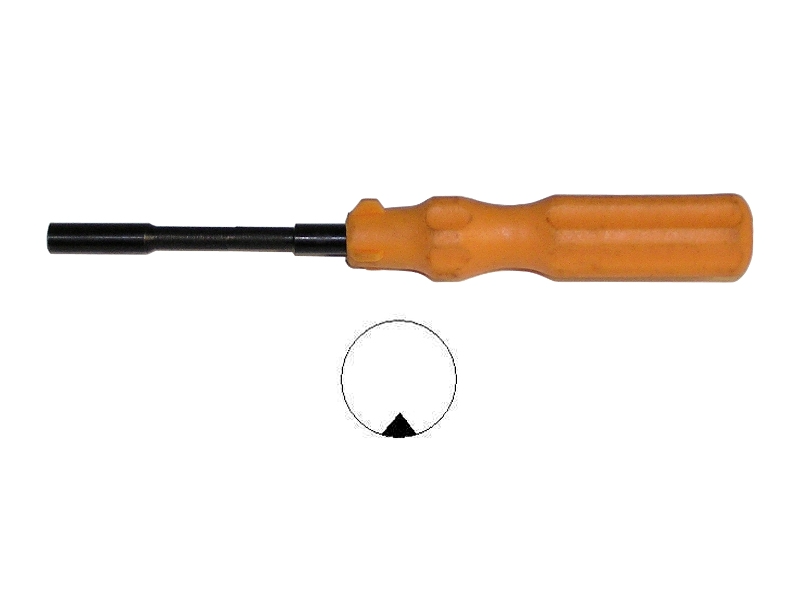
Tools Required
- Carburettor adjustment tool
Procedure
- Start the chainsaw and allow it to warm up fully
- Locate the carburettor adjustment screws:
- L = Low speed adjustment
- H = High speed adjustment
Adjusting Idle (L Screw)
- Turn the L screw until the engine idles smoothly
- Ensure the chain does not rotate at idle
- Fine-tune until stable idle is achieved
Adjusting High Speed (H Screw)
- Run the chainsaw at full throttle
- Turn the H screw anti-clockwise until the engine begins to struggle
- Slowly turn clockwise until the engine returns to smooth full speed operation
If You Are Unable to Complete This Procedure
If you are not confident adjusting the carburettor:
- Stop making adjustments immediately
- Contact our Technical Support Team
A replacement carburettor or professional servicing may be required. Warranty support may apply if the product is within its coverage period.
Frequently Asked Questions
Why does my chainsaw cut out when I release the throttle?
This is usually caused by incorrect idle settings, blocked air filter, or stale fuel.
Can fuel cause idle problems?
Yes. Old fuel or incorrect mixing ratios can prevent stable idling.
Is it safe to adjust the carburettor myself?
Only if you have the correct tool and experience. Incorrect adjustment can damage the engine.
What is the most common cause of poor idle?
A dirty air filter or incorrect L-screw setting is the most common cause.
Do I need to warm the engine before adjusting idle?
Yes. Always allow the engine to warm up fully before making adjustments.
My Petrol Chainsaw will not rev up
Overview
If your petrol chainsaw starts but does not reach full speed when the throttle is applied, this is usually caused by fuel issues, restricted airflow, or incorrect carburettor settings. In most cases, the problem can be resolved with a few basic checks before any repairs are required.
This guide explains the most common causes and how to safely troubleshoot the issue.
Step-by-Step Guide
Step 1: Check the Fuel
Ensure you are using fresh fuel that is less than 30 days old.
Check the fuel mixture ratio is correct:
- 40:1 fuel-to-oil mix
- 1000ml unleaded petrol
- 25ml 2-stroke engine oil
If the fuel is old or incorrectly mixed, drain and refill the tank with a fresh mixture.
Step 2: Check the Air Filter
Remove and inspect the air filter.
Look for:
- Dirt or debris
- Blockages
- Heavy oil saturation
Clean or replace the air filter if required. A blocked filter will restrict airflow and reduce engine power.
Step 3: Check the Fuel Cap
Ensure the fuel cap is fitted correctly and securely tightened by hand.
A loose or faulty cap can affect fuel delivery and engine performance.
Step 4: Check the Chain Brake
Ensure the chain brake is fully disengaged before use.
If the chain brake is engaged, the engine may run but the chain and throttle response will not operate correctly.
Step 5: Check Carburettor Settings (If Required)
⚠️ Important: Only carry out this step if you are confident with mechanical adjustments. Incorrect settings may damage the engine.
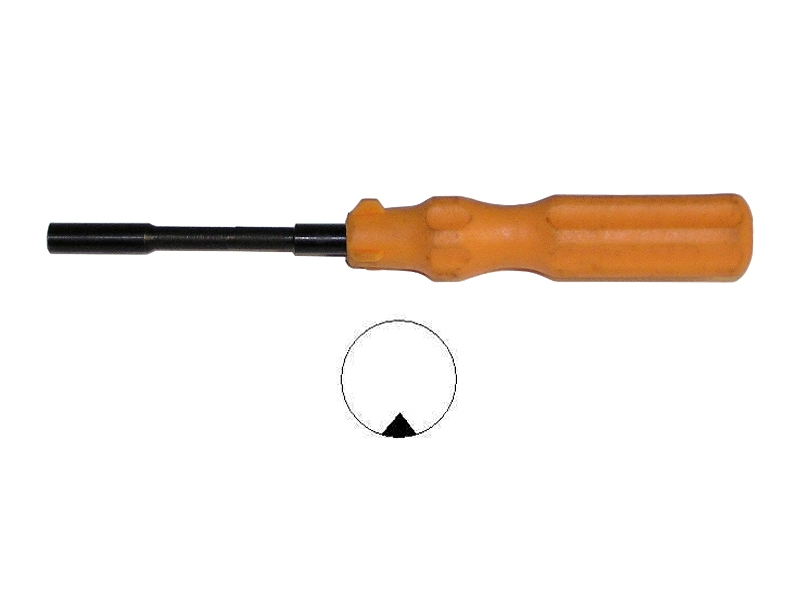
If all other checks are correct, the carburettor may need adjustment.
L Screw (Low Speed):
- Adjust until the engine idles smoothly without chain movement
H Screw (High Speed):
- Run the chainsaw at full throttle
- Turn anti-clockwise until engine struggles
- Slowly turn clockwise until full power is restored
If unsure, contact technical support before adjusting.
If the Issue Persists
If the chainsaw still will not rev up after completing the above checks, the issue may be internal (carburettor fault, fuel system blockage, or air leak).
Please contact our Technical Support Team for further assistance.
Summary
- Use fresh, correctly mixed fuel (40:1)
- Clean or replace the air filter
- Ensure fuel cap is secure
- Confirm chain brake is disengaged
- Check carburettor settings if required
FAQ
Why does my chainsaw start but not rev properly?
This is usually caused by restricted airflow, old fuel, or carburettor imbalance.
Can old fuel cause this issue?
Yes. Fuel older than 30 days can degrade and affect engine performance.
Do I need to adjust the carburettor?
Only if all basic checks fail. Most issues are resolved without adjustment.
Can a blocked air filter affect revving?
Yes. A blocked filter will limit airflow and reduce engine speed and power.
When should I contact support?
If the issue continues after checking fuel, air filter, fuel cap, and chain brake.
My Petrol Chainsaw chain will not move when I rev the engine
Overview
If your petrol chainsaw engine is running but the chain does not rotate when you apply throttle, the issue is usually caused by an engaged chain brake, incorrect chain tension, or damage to the chain or guide bar.
This guide explains the most common causes and how to safely check and resolve them.
Step-by-Step Guide
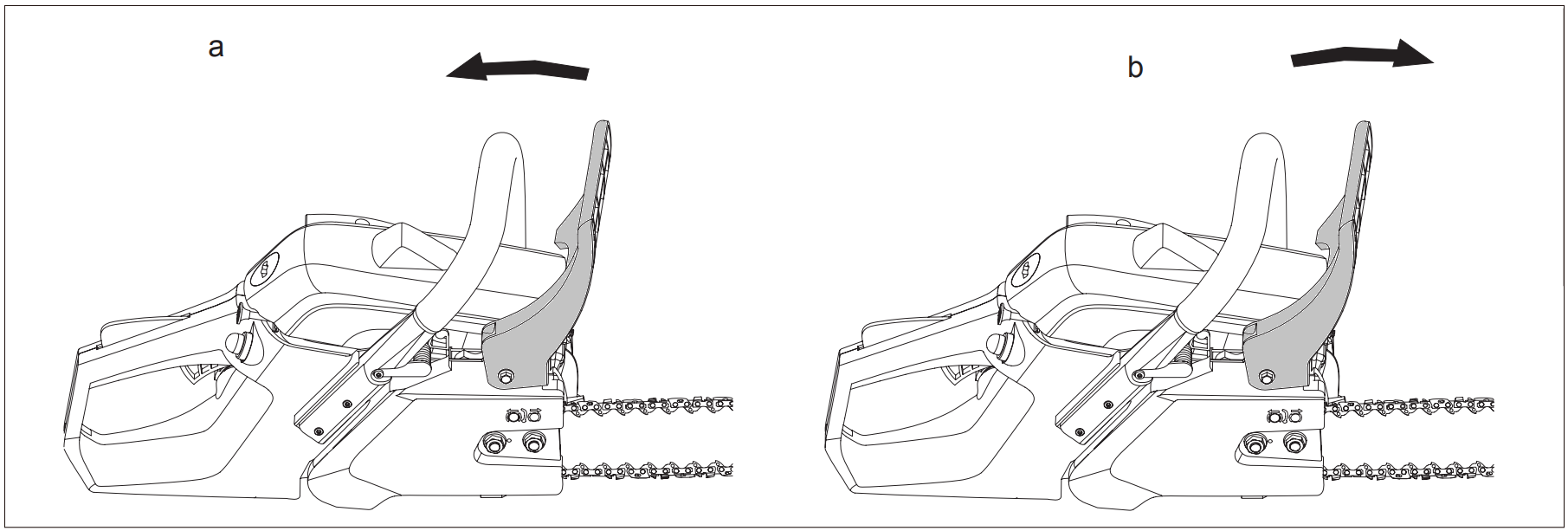
Step 1: Check the Chain Brake
The chain brake is the most common reason the chain will not move.
- Pull the chain brake lever backwards towards the front handle to disengage it
- When correctly disengaged, the chain should move freely by hand (wear gloves)
- If the lever is pushed forward, the brake is engaged and will lock the chain
Step 2: Check the Chain Tension
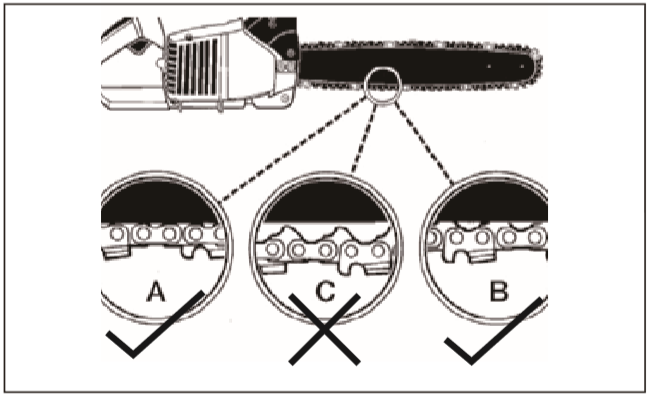
Ensure the chain is correctly tensioned.
- The chain should sit snugly in the guide bar
- You should be able to lift a small section of chain slightly away from the bar
- The drive links must remain seated in the guide groove
If the chain is too tight or too loose, it may prevent proper movement or cause the chain to jam under load.
Step 3: Check the Chain and Guide Bar
Inspect both the chain and guide bar for signs of damage or wear.
Look for:
- Bent or damaged chain links
- Excessive wear on the guide bar
- Debris lodged in the bar groove
If damage is found, replace the affected parts before using the chainsaw again.
Step 4: Understand Chain Tension Changes During Use
Chain tension can change during operation:
- A cold chain may appear slightly loose before use
- As the chain warms up, it will expand and tighten
- Regular tension checks are required during operation
Always adjust tension according to your product manual.
If the Issue Persists
If the chain still does not move after completing all checks, the issue may be caused by internal drive or clutch damage.
Please contact our Technical Support Team for further assistance.
Summary
- Ensure the chain brake is fully disengaged
- Check correct chain tension
- Inspect chain and guide bar for damage or debris
- Recheck tension as the chain warms up
FAQ
Why does my chainsaw rev but the chain doesn’t move?
This is most commonly caused by the chain brake being engaged or the chain being incorrectly tensioned.
Can a loose chain stop it from moving?
Yes. A loose chain can slip off the drive sprocket or fail to engage properly.
What if the chain brake is off but it still doesn’t move?
Check the chain tension and guide bar. If both are fine, there may be an internal clutch or drive issue.
Do I need to stop and check tension while using it?
Yes. Chains expand as they heat up, so tension should be checked regularly during use.
My Petrol Chainsaw will not lubricate the chain
Quick Answer
If your petrol chainsaw is not lubricating the chain, the most common causes are incorrect oil, a blocked oil outlet, an empty oil tank, or a restricted oil flow setting. In most cases, the issue can be resolved by checking the oil type, clearing blockages, and confirming oil is reaching the bar during use.
Safety Notice
⚠️ Always switch off the chainsaw before carrying out any inspection or maintenance.
⚠️ Never operate the chainsaw without chain oil, as this can cause serious damage to the chain and guide bar.
Correct Chain Oil Information
Your chainsaw requires a lightweight chain lubricating oil.
Suitable oils:
- Standard chain oil
- SAE30 oil
- Automotive oils such as 5W30 or 10W30
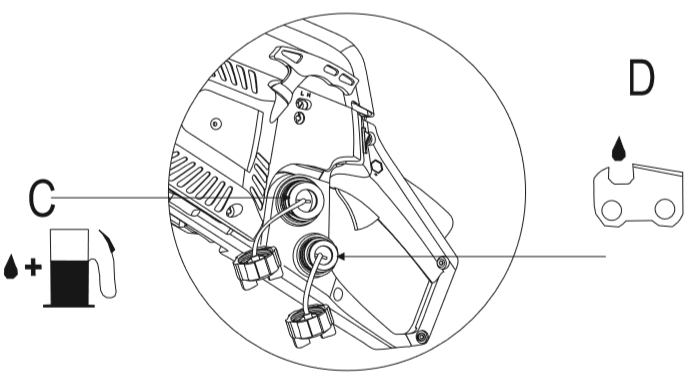
Do not use:
- Thick or “extra-tacky” oils
- Anti-fling oils (especially in colder weather)
These can restrict oil flow and prevent proper lubrication.
Basic Checks
Before assuming a fault, check the following:
- Confirm you are using the correct chain oil
- Check the oil tank is filled
- Inspect the oil outlet for blockages
- Check for visible oil leaks
- Ensure the oil cap and filter are correctly fitted
How to Check Chain Oil Flow
To confirm the system is working:
- Start the chainsaw
- Run the chain at a medium speed
- Hold the chainsaw safely towards a light surface (such as wood or cardboard)
- Look for a light spray or oil trace
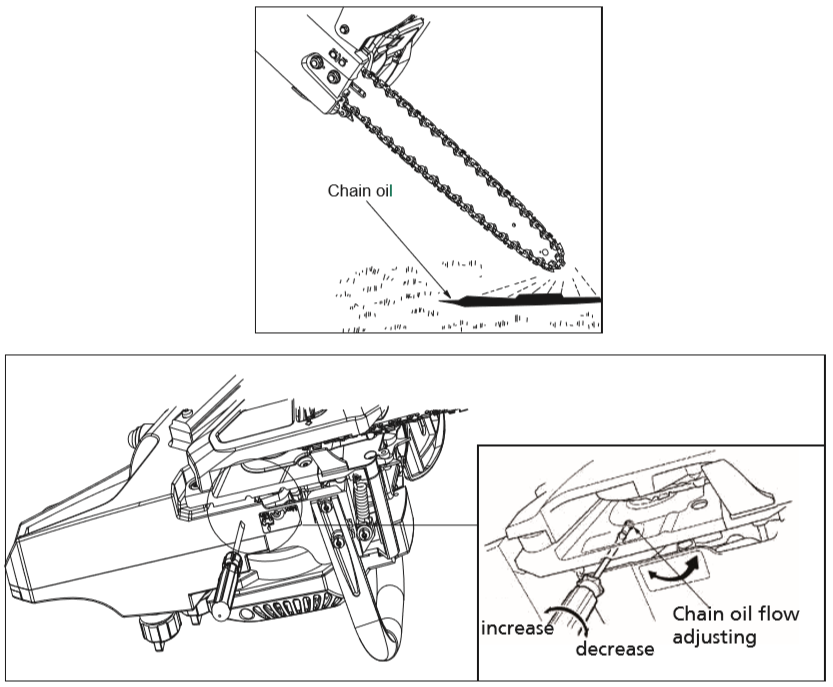
✔ If oil is visible, the system is working correctly
✖ If no oil is visible, continue with the checks below
Adjusting Oil Flow (If Applicable)
Some models allow oil flow adjustment.
To adjust:
- Switch off the chainsaw
- Locate the oil adjustment screw (usually underneath or near the clutch area)
- Turn the screw slightly to increase or decrease oil flow
- Restart the chainsaw and recheck oil delivery
Important Notes
- The oil tank should empty at a similar rate to the fuel tank
- Always refill chain oil when refuelling
- Keep the bar groove and oil port clean to prevent blockages
If the Problem Continues
If no oil is being delivered after completing all checks, there may be a blockage or a fault within the oil delivery system, such as:
- Blocked oil line
- Faulty oil pump
- Internal lubrication issue
If this happens, please contact our Technical Support Team for further assistance.
Frequently Asked Questions
Why is my chainsaw not oiling the chain?
This is usually caused by incorrect oil, blockages in the oil system, or an empty oil tank.
How often should I refill chain oil?
Every time you refuel the chainsaw.
What oil should I use?
Lightweight chain oil, SAE30, or automotive oils such as 5W30 or 10W30.
Can I use thick oil?
No. Thick oils can restrict flow and prevent proper lubrication.
My Petrol Chainsaws pull cord will not retract
Quick Answer
If the pull cord on your petrol chainsaw will not retract, it is usually caused by a fault within the starter assembly, such as a damaged recoil spring, snapped cord, or worn starter pawls. In most cases, the complete starter assembly will need to be replaced.
Safety Notice
⚠️ Ensure the chainsaw is switched off and placed in a safe, stable position before carrying out any inspection.
⚠️ Do not attempt to force the pull cord, as this may cause further damage to the starter mechanism.
Possible Causes
Damaged or Snapped Pull Cord
If the pull cord has snapped or will not retract:
- The recoil spring may have failed
- The starter assembly is likely damaged
- The complete starter assembly will usually need replacing
Faulty Starter Mechanism
If the cord moves but does not engage the engine:
- The starter pawls may be worn or broken
- The pawls may not be gripping the flywheel correctly
- Starter pawls should typically be replaced as a matched pair
Recommended Action
If your pull cord is not retracting or the starter system is damaged:
- Do not continue to use the chainsaw
- Do not attempt to force or repair the recoil spring
- Inspect the starter assembly for visible damage if safe to do so
When to Contact Support
Contact our Technical Support Team if:
- The pull cord will not retract at all
- The starter assembly is loose, broken, or jammed
- The engine does not turn over when pulling the cord
- You are unsure which replacement part is required
Our team can help identify the correct starter assembly and advise on replacement options.
Frequently Asked Questions
Why won’t my chainsaw pull cord retract?
This is usually caused by a broken recoil spring or a damaged starter assembly.
Can I repair the pull cord mechanism myself?
In most cases, no. The starter assembly contains a tensioned spring system that can be difficult and unsafe to repair without specialist tools.
Do I need to replace the whole starter assembly?
Yes, if the cord is not retracting or the mechanism is damaged, the complete starter assembly is usually required.
What are starter pawls?
Starter pawls are small components that engage the flywheel when you pull the cord. If they are worn or broken, the engine will not turn over properly.
What should I do if the pull cord is stuck?
Do not force it. Forcing the cord can damage the recoil spring or housing. Contact support for assistance.
My Petrol Chainsaws start/stop switch will not turn off the Chainsaw
Quick Answer
If the start/stop (ignition) switch does not turn off your petrol chainsaw, this is a safety-critical fault usually caused by a wiring issue or a faulty switch. The chainsaw must not be used until the issue has been repaired.
⚠️ Safety Notice
⚠️ If the chainsaw does not stop using the ignition switch, treat this as a serious safety issue.
⚠️ Do not continue to operate the chainsaw until the fault has been identified and repaired.
How to Stop the Chainsaw in an Emergency
If the ignition switch fails to turn the engine off:
- Pull the choke control fully out to stall the engine
- Engage the chain brake immediately to stop the chain moving
⚠️ These steps should only be used as an emergency stopping method.
Possible Causes & Basic Checks
Check the Start/Stop Switch Wiring
Inspect the wiring connected to the start/stop switch:
- Ensure all connections are secure
- Check for any loose, broken, or damaged wires
- Look for signs of wear or disconnection
A faulty or disconnected wire may prevent the switch from stopping the engine.
Important Information
If the start/stop switch does not stop the chainsaw when moved to the STOP position:
- The machine must be repaired before further use
- Do not attempt to operate the chainsaw again until the fault is resolved
- Do not rely on emergency stopping methods for normal use
When to Contact Support
Contact our Technical Support Team if:
- The chainsaw does not stop using the switch
- Wiring appears damaged or disconnected
- The switch feels loose or unresponsive
- You are unsure how to safely inspect the issue
We can advise on repair options or replacement parts.
Frequently Asked Questions
Why won’t my chainsaw turn off with the stop switch?
This is usually caused by a faulty switch, broken wiring, or a disconnected earth/kill wire.
Is it safe to keep using my chainsaw if the stop switch doesn’t work?
No. This is a safety-critical fault and the chainsaw must not be used until repaired.
How do I stop the chainsaw if the switch fails?
Use the choke to stall the engine and engage the chain brake, but only as an emergency measure.
Can a faulty switch be repaired?
In some cases the wiring can be repaired, but often the switch assembly will need replacing.
How do I replace the blade tension assembly on my Petrol Chainsaw
Quick Answer
If your petrol chainsaw chain will no longer tighten or loosen correctly, the chain tensioner assembly may be worn or damaged. Replacing the assembly will restore the chain tensioning function, provided it is fitted correctly and the guide bar and chain are in good condition.
⚠️ Safety Notice
Before carrying out any maintenance:
- Switch off the chainsaw and allow it to cool completely.
- Remove the spark plug cap to prevent accidental starting.
- Wear suitable protective gloves when handling the guide bar and chain.
- Work on a clean, stable surface.
When Does the Tensioner Assembly Need Replacing?
You may need to replace the chain tensioner assembly if:
- The chain cannot be tightened or loosened correctly.
- The tensioning knob no longer engages with the mechanism.
- The chain remains loose despite adjusting the tension.
- The side cover or chain brake housing is damaged.
- The tensioning mechanism is worn, broken, or missing parts.
The tensioner assembly is usually located behind the side cover and may form part of the chain brake housing, depending on your model.
Before You Begin
The design of the tensioner assembly varies between chainsaw models.
Always refer to your product's user manual or parts diagram to ensure you have the correct replacement part and understand how it is fitted.
Replacing the Tensioner Assembly
- Ensure the chainsaw is switched off and fully stopped.
- Disengage the chain brake.
- Loosen the chain tension and remove the side cover by undoing the retaining knob or nuts.
- Remove the guide bar and chain if necessary to gain access to the tensioner assembly.
- Remove the existing tensioner assembly.
- Inspect the mounting area and remove any dirt, sawdust, or debris.
- Position the new tensioner assembly, ensuring it aligns correctly with the guide bar adjustment pin and mounting points.
- Refit the guide bar and chain.
- Reinstall the side cover and tighten it loosely.
- Adjust the chain tension until the chain sits snugly against the guide bar but can still be pulled around by hand while wearing gloves.
- Fully tighten the side cover once the correct chain tension has been achieved.
After Reassembly
Before using the chainsaw:
- Check that the chain moves freely around the guide bar.
- Confirm the chain brake operates correctly.
- Ensure all fixings are securely tightened.
- Run the chainsaw briefly and recheck the chain tension, adjusting if necessary.
If the Problem Persists
If the chain still cannot be tensioned correctly after replacing the tensioner assembly:
- Check the guide bar for excessive wear or damage.
- Inspect the chain for wear or stretching.
- Ensure the tensioner adjustment pin is correctly engaged with the guide bar.
- Contact our Technical Support Team for further assistance if the problem continues.
Frequently Asked Questions
Why won't my chainsaw chain tighten?
The most common causes are a worn or damaged tensioner assembly, a stretched chain, or a worn guide bar.
Do I need to remove the chain to replace the tensioner assembly?
On most models, yes. Removing the guide bar and chain provides access to the tensioner assembly.
Why is the chain still loose after replacing the tensioner?
Check that the tensioner adjustment pin is correctly engaged with the guide bar and inspect the guide bar and chain for wear.
Should the chain be tight after adjustment?
No. The chain should sit firmly against the guide bar but still move freely by hand when wearing protective gloves.
How do I change the fuel lines on my Petrol Chainsaw
Quick Answer
If your petrol chainsaw is difficult to start, leaking fuel, or running inconsistently, the fuel lines may need replacing. When fitting new fuel lines, it is important to route them correctly and ensure they are securely connected to prevent fuel leaks and maintain reliable engine performance.
⚠️ Safety Notice
Before carrying out any maintenance:
- Switch off the chainsaw and allow the engine to cool completely.
- Remove the spark plug cap to prevent accidental starting.
- Empty the fuel tank before removing the fuel lines.
- Work in a well-ventilated area away from open flames, sparks, or other ignition sources.
- Wear suitable protective gloves and eye protection.
When Do the Fuel Lines Need Replacing?
You may need to replace the fuel lines if:
- The chainsaw is difficult to start.
- Fuel is leaking from the machine.
- The engine runs unevenly or cuts out.
- The fuel lines are cracked, brittle, split, or damaged.
- The fuel lines have become loose or disconnected.
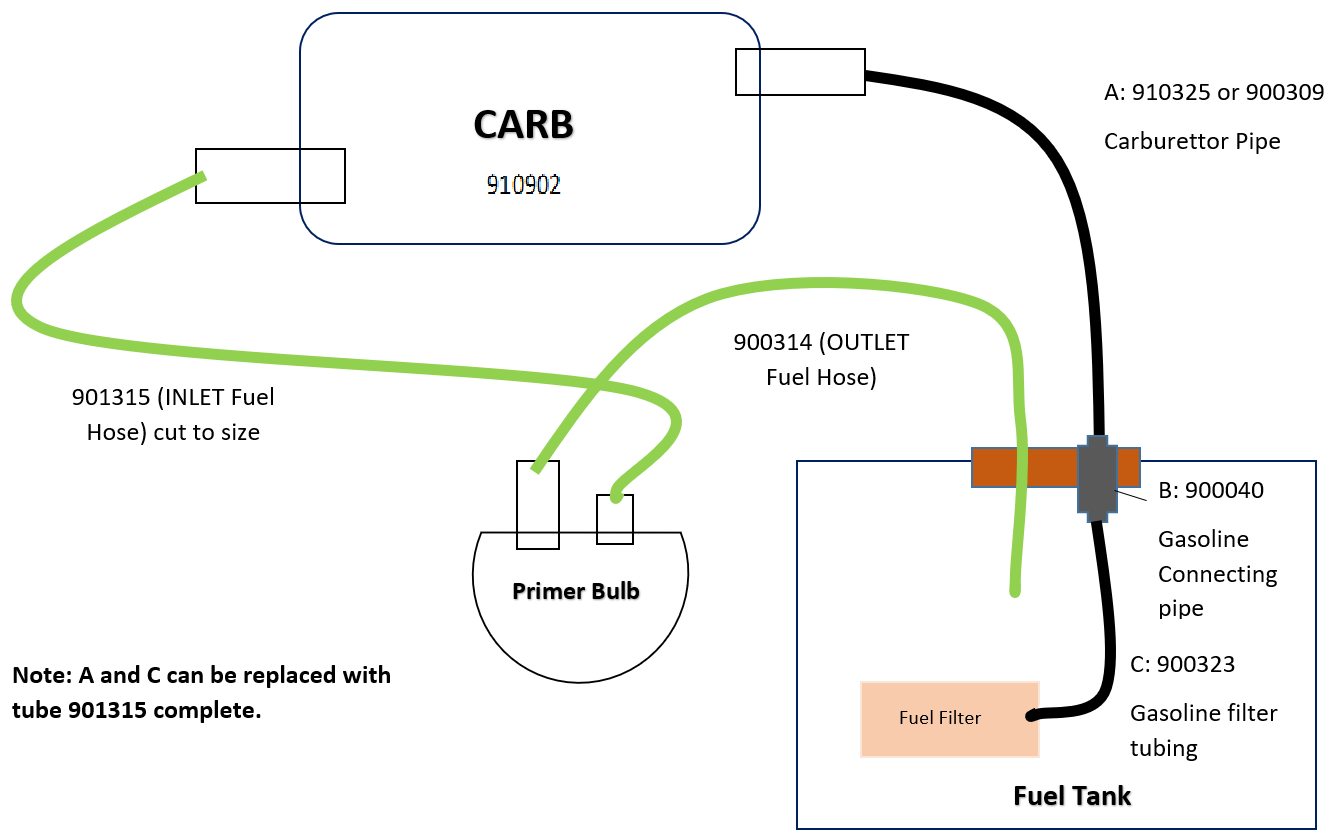
Before You Begin
Fuel line routing can vary between chainsaw models.
Always refer to the parts diagram or user manual for your specific model to ensure the fuel lines are routed correctly and connected to the appropriate components.
Replacing the Fuel Lines
- Drain any remaining fuel from the fuel tank into a suitable container.
- Remove any covers necessary to access the fuel tank and carburettor.
- Carefully remove the existing fuel lines, noting their routing and connection points.
- Compare the new fuel lines with the originals to ensure they are the correct length and diameter.
- Fit the new fuel lines, following the routing shown for your model.
- Ensure each fuel line is fully seated on its connection and is not twisted, kinked, or trapped.
- Refit any components or covers removed during the replacement.
- Refill the fuel tank with the correct fuel mixture.
Before Starting the Chainsaw
Before testing the machine:
- Check all fuel line connections are secure.
- Inspect for any signs of fuel leaks.
- Press the primer bulb (if fitted) until fuel flows through the lines.
- Start the chainsaw and allow it to idle.
- Check again for leaks while the engine is running.
Important Tip
Correct fuel line routing is essential for reliable operation.
If the fuel lines are connected incorrectly, the chainsaw may:
- Fail to start.
- Stall shortly after starting.
- Run poorly or lose power.
- Leak fuel.
If you are unsure of the correct routing, refer to the model-specific parts diagram before operating the chainsaw.
If the Problem Persists
If the chainsaw still does not run correctly after replacing the fuel lines:
- Check that all fuel line connections are secure.
- Ensure the fuel filter is fitted correctly inside the tank.
- Inspect the carburettor and primer bulb for damage or blockages.
Frequently Asked Questions
Why do fuel lines need replacing?
Fuel lines naturally deteriorate over time and can become hard, cracked, or split, leading to fuel leaks and poor engine performance.
Can I reuse the old fuel lines?
No. If the fuel lines are damaged or have become brittle, they should always be replaced.
Why won't my chainsaw start after replacing the fuel lines?
The fuel lines may be routed incorrectly, not fully connected, or contain air. Check the routing, ensure all connections are secure, and prime the fuel system before attempting to start the engine.
How do I know if a fuel line is leaking?
Signs of a leaking fuel line include the smell of petrol, visible fuel around the machine, or damp fuel lines and connections.
View ArticleHow do I prepare my Petrol Chainsaw for Winter
Quick Answer
Preparing your petrol chainsaw for winter storage helps prevent fuel deterioration, carburettor blockages, and starting problems. Before storing the chainsaw, empty the fuel tank, run the engine until it stops, clear any remaining fuel from the system, and store the machine in a clean, dry location.
⚠️ Safety Notice
Before carrying out any maintenance:
- Switch off the chainsaw and allow the engine to cool completely.
- Work in a well-ventilated area away from open flames, sparks, or other ignition sources.
- Wear suitable protective gloves when handling the chainsaw.
Why Prepare Your Chainsaw for Winter?
Fuel left in the chainsaw during long periods of storage can deteriorate and leave deposits inside the fuel system. This can lead to:
- Starting difficulties
- Poor engine performance
- Blocked carburettors
- Additional maintenance before the next season
Taking a few minutes to prepare your chainsaw before storage can help keep it in good working condition.
Preparing Your Chainsaw for Winter Storage
Step 1: Empty the Fuel Tank
Drain any remaining fuel from the fuel tank into a suitable container.
Removing old fuel helps prevent residue and varnish from forming inside the fuel system during storage.
Step 2: Empty the Carburettor
Start the chainsaw and allow it to run until it stops naturally.
This removes any fuel remaining inside the carburettor.
Step 3: Clear the Fuel System
Press the primer bulb several times to move any remaining fuel through the fuel lines.
Attempt to restart the chainsaw.
If the engine does not start, the fuel system has been successfully emptied.
Storing Your Chainsaw
Store the chainsaw in a:
- Clean, dry location
- Well-ventilated area
- Place protected from moisture and extreme temperatures
Avoid storing the chainsaw in damp environments, as this can cause corrosion and damage to metal components.
If fitted, always engage the chain brake and fit the guide bar cover before storing the chainsaw.
Before Using the Chainsaw Again
When you're ready to use the chainsaw after storage:
- Inspect the machine for any signs of damage or wear.
- Fill the fuel tank with the correct fresh fuel mixture.
- Check the chain oil reservoir and refill if required.
- Inspect the guide bar and chain, adjusting the chain tension if necessary.
- Start the chainsaw following the instructions in the user manual.
Frequently Asked Questions
Why should I drain the fuel before winter?
Fuel can deteriorate during storage, leaving deposits that may block the carburettor and make the chainsaw difficult to start.
Should I leave fuel in the carburettor?
No. Running the engine until it stops helps remove fuel from the carburettor and reduces the risk of fuel-related issues.
Where should I store my chainsaw?
Store it in a clean, dry, and well-ventilated location away from moisture and sources of heat or ignition.
Should I check the chain before using the chainsaw again?
Yes. Before using the chainsaw after storage, check the chain tension, guide bar, and chain oil level to ensure the machine is safe to operate.
How do I replace the oil pump on my Petrol Chainsaw
Quick Answer
If your petrol chainsaw is no longer lubricating the chain and the oil pump has been identified as the cause, it will need to be replaced. This repair involves removing the clutch assembly to gain access to the oil pump and should only be carried out by someone with good mechanical knowledge and the correct tools.
⚠️ Safety Notice
This is a complex repair that requires specialist tools and mechanical experience.
Before you begin:
- Switch off the chainsaw and allow the engine to cool completely.
- Disconnect the spark plug cap to prevent accidental starting.
- Empty the fuel and chain oil tanks where possible to reduce the risk of spills.
- Wear suitable protective gloves and eye protection.
- Work on a clean, stable surface.
If you are unsure at any stage, please contact our Technical Support Team before continuing.
Tools Required
You will need:
- Clutch removal tool
- Piston stop
- T20 Torx bit
- 13 mm socket
- Replacement oil pump
Before You Begin
The oil pump is located behind the clutch assembly. To access it, the clutch and surrounding components must first be removed.
Take note of the position of all components during disassembly to ensure they are reassembled correctly.
Oil Pump Replacement Procedure
Step 1: Remove the Chain Brake Assembly
- Remove the chain brake assembly by undoing the two 13 mm retaining nuts.
- Remove the guide bar and chain if they have not already been removed.
Step 2: Remove the Clutch
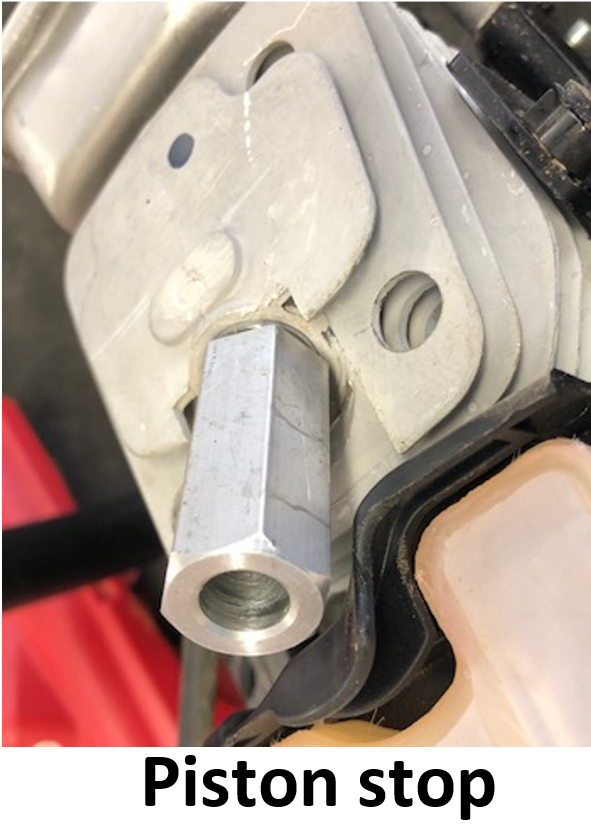
- Remove the spark plug and fit a piston stop into the cylinder.
- Using the clutch removal tool, rotate the clutch clockwise (towards OFF) to loosen it.
- The clutch may be tight initially before it begins to unscrew.
- Continue until the clutch has been completely removed.
Step 3: Access the Oil Pump
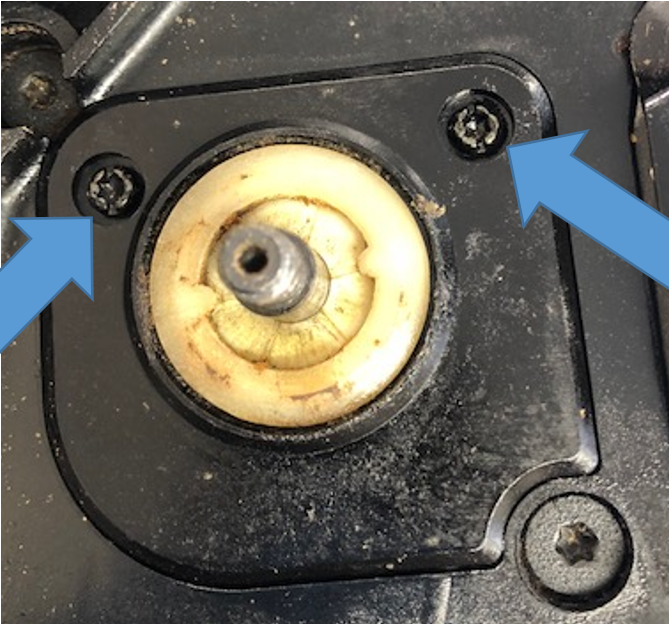
- Using a T20 Torx bit, remove the two upper screws securing the black cover behind the clutch.
- Remove the cover to expose the oil pump.
Step 4: Remove the Oil Pump
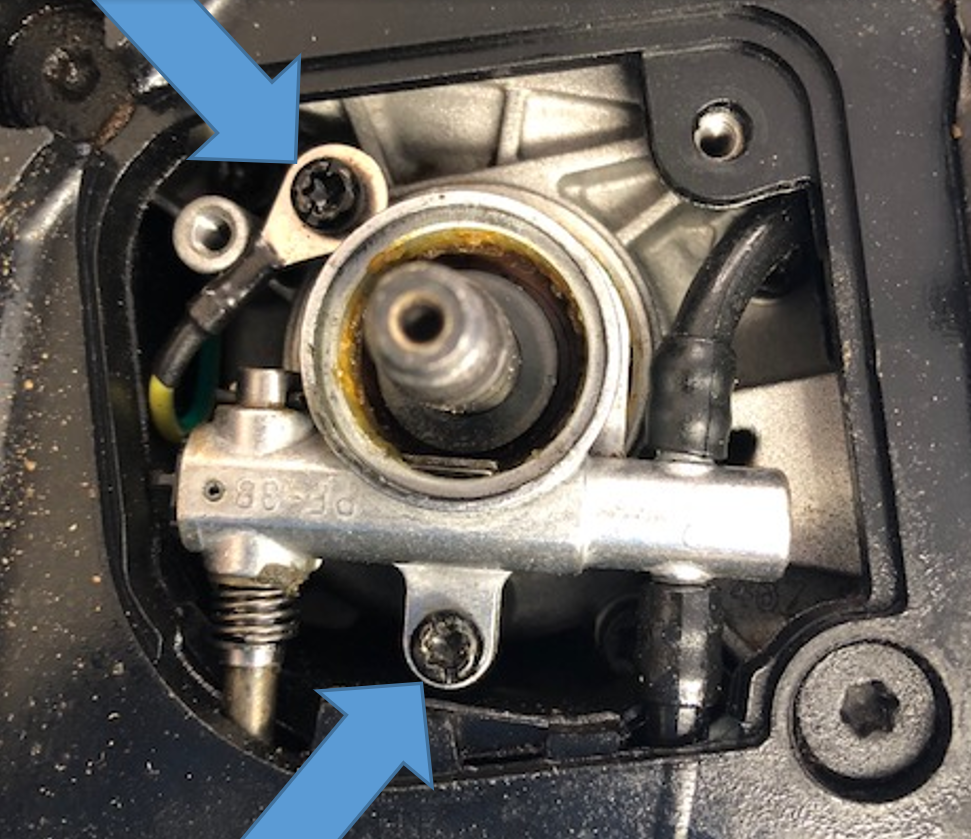
- Remove the two Torx screws securing the oil pump.
- Take care when removing the upper right-hand screw, as it also secures the earth cable.
- Disconnect the oil pipes from the pump and remove the oil pump.
Step 5: Install the New Oil Pump
- Position the replacement oil pump.
- Reconnect the oil pipes.
- Refit the earth cable in its original position.
- Tighten both retaining screws securely.
Step 6: Reassemble the Chainsaw
- Refit the black cover and secure it with the two Torx screws.
- Reinstall the clutch using the clutch removal tool.
- Tighten the clutch by turning it anti-clockwise until secure.
Important: Do not overtighten the clutch. Check that it rotates freely and that all components are correctly seated.
Step 7: Refit the Cutting Components
- Refit the guide bar and chain.
- Reinstall the chain brake assembly.
- Adjust the chain tension in accordance with the user manual.
Step 8: Final Checks
Before using the chainsaw:
- Ensure all screws and fixings are secure.
- Check that the chain moves freely.
- Fill the chain oil reservoir.
- Start the chainsaw and confirm that oil is being delivered to the guide bar and chain.
If You Are Unsure
If you are not confident carrying out this repair, or if the chainsaw still does not lubricate the chain after replacing the oil pump, please contact our Technical Support Team for further assistance.
Frequently Asked Questions
How do I know if the oil pump needs replacing?
If the oil tank is full, the oil ports are clear, and the chain still is not receiving oil, the oil pump may be faulty.
Do I need to remove the clutch to replace the oil pump?
Yes. The oil pump is located behind the clutch assembly and cannot be accessed without first removing the clutch.
Why is a piston stop required?
The piston stop prevents the engine from turning while the clutch is being removed and refitted.
Should I test the chainsaw after replacing the oil pump?
Yes. Refill the chain oil reservoir and check that oil is being delivered to the guide bar before using the chainsaw for cutting.
View Article